Skip to content

Tarot Card Meanings

A complete guide to all 78 cards — Major and Minor Arcana, with the symbolism and the story behind each one.

Major Arcana

  • The Fool
    Upright
    New Beginnings · Adventure · Innocence
    Reversed
    Recklessness · Impulsiveness · Lack of Planning

    The Fool

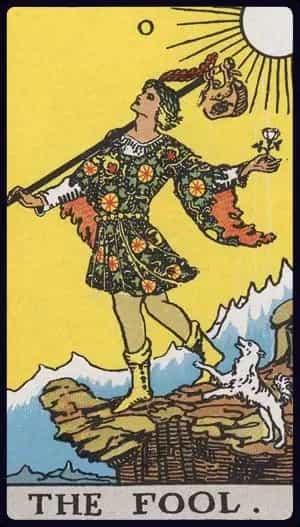
    The Fool depicts a young man standing at the edge of a cliff, carrying a small bundle and gazing upward with childlike wonder. A small dog nips at his heels, representing both loyalty and potential danger. The sun shines brightly in the background, symbolizing optimism and new beginnings. This card represents the spirit of adventure, innocence, and faith in the unknown. The Fool encourages embracing life's journey with trust, reminding us that sometimes the greatest discoveries come from stepping into uncertainty with an open heart.
  • The Magician
    Upright
    Action · Focus · Communication
    Reversed
    Lack of Action · Communication Barriers · Abuse of Power

    The Magician

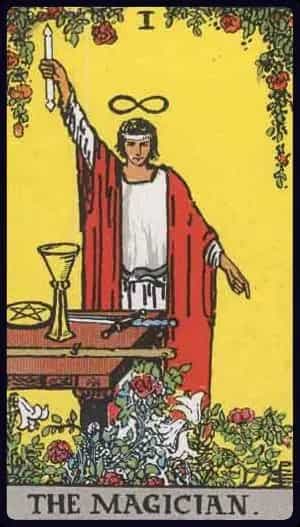
    The Magician shows a young man standing before a table displaying the four suits of the Tarot - wand, cup, sword, and pentacle. Above his head is the infinity symbol, and he holds a wand upward toward the heavens while pointing downward to earth. The scene symbolizes the connection between divine will and earthly action. The Magician represents the power of manifestation through focused intention and skillful use of available resources. He reminds us that we have all the tools needed to achieve our goals when we align our thoughts, words, and actions with purpose.

  • The High Priestess
    Upright
    Intuition · Introspection · Mystery
    Reversed
    Lack of Intuition · Ignoring Inner Voice · Secrets

    The High Priestess

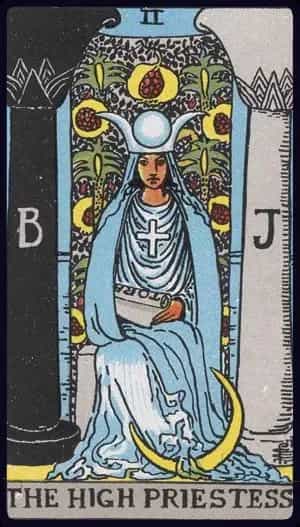
    The High Priestess sits between two pillars - one black and one white - symbolizing the balance of opposites. She holds a scroll marked 'Tora' and wears a cross on her chest, with the moon at her feet and a veil behind her. Every detail represents the gateway to hidden knowledge and the unconscious mind. The High Priestess embodies intuition, mystery, and the wisdom that comes from within. She encourages trusting one's inner voice and exploring the deeper mysteries of life beyond surface appearances.

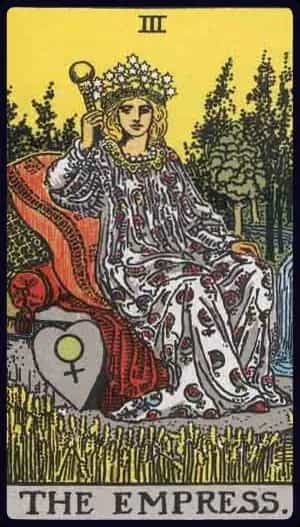
  • The Empress
    Upright
    Abundance · Creativity · Nurturing
    Reversed
    Over-dependence · Lack of Creativity · Materialism

    The Empress

    The Empress sits gracefully on a throne surrounded by lush vegetation and a flowing stream, symbolizing fertility and abundance. She wears a crown of stars and holds a scepter, with a heart-shaped shield bearing Venus's symbol at her feet. The composition represents the nurturing aspect of the divine feminine and the creative power of nature. The Empress embodies abundance, fertility, and the beauty of creation. She reminds us of the importance of nurturing both ourselves and others, and trusting in the natural cycles of growth and manifestation.

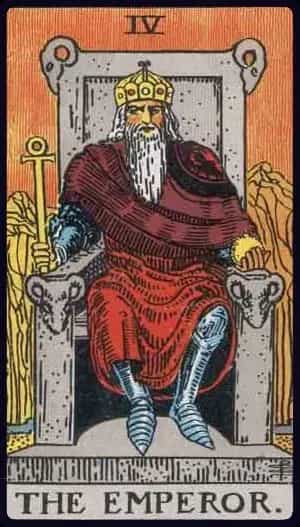
  • The Emperor
    Upright
    Authority · Stability · Structure
    Reversed
    Tyranny · Lack of Flexibility · Over-control

    The Emperor

    The Emperor sits on a stone throne adorned with ram's heads, symbolizing Aries and masculine authority. He holds an ankh scepter and a golden orb, with mountains in the background representing stability and permanence. Every element embodies the archetype of the father figure and structured authority. The Emperor represents leadership, structure, and the power of rational thinking. He encourages establishing order, setting boundaries, and taking responsibility for creating a stable foundation in life.

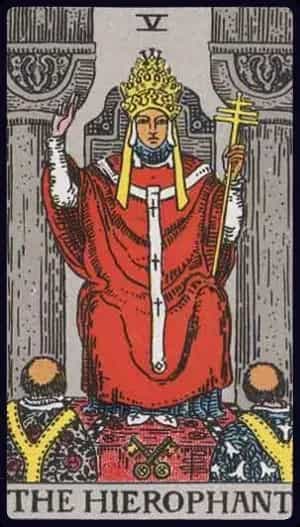
  • The Hierophant
    Upright
    Tradition · Faith · Guidance
    Reversed
    Rigidity · Lack of Innovation · Dogmatism

    The Hierophant

    The Hierophant sits on a throne between two pillars, wearing papal vestments and making a blessing gesture. Two monks kneel before him, symbolizing spiritual guidance and the passing of sacred knowledge. Above him are crossed keys, representing the keys to heaven. Every element embodies religious and spiritual authority. The Hierophant represents tradition, spiritual guidance, and the wisdom of established teachings. He encourages following spiritual or moral principles and seeking wisdom through established channels of learning.

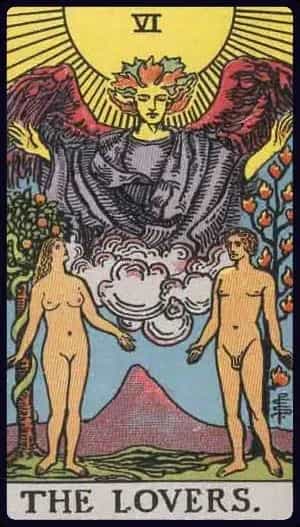
  • The Lovers
    Upright
    Love · Harmony · Choice
    Reversed
    Wrong Choice · Relationship Breakdown · Value Conflict

    The Lovers

    The Lovers depicts a man and woman standing naked before an angel, with a mountain and tree of knowledge in the background. The angel appears to be blessing their union, symbolizing divine approval of their connection. Each symbol represents the sacred union of masculine and feminine energies. The Lovers card signifies love, partnership, and important life choices. It encourages making decisions aligned with one's values and embracing harmonious relationships that bring fulfillment and growth.

  • The Chariot
    Upright
    Success · Ambition · Determination
    Reversed
    Lack of Control · Lack of Direction · Aggression

    The Chariot

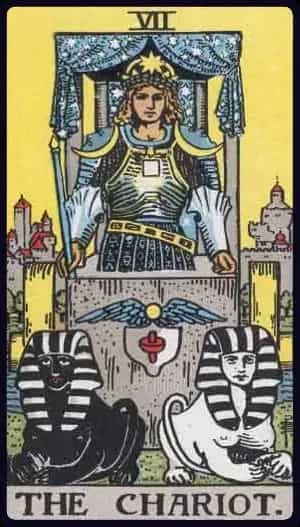
    The Chariot shows a warrior driving a chariot pulled by two sphinxes - one black and one white - symbolizing the balance of opposing forces. The charioteer wears armor and holds a wand, with wings on his shoulders and a canopy of stars above. The tableau represents the triumph of will over conflicting energies. The Chariot signifies victory, determination, and focused direction. It encourages harnessing inner strength to overcome obstacles and maintain control over one's path toward success.

  • Strength
    Upright
    Courage · Patience · Inner Strength
    Reversed
    Weakness · Lack of Self-Control · Impatience

    Strength

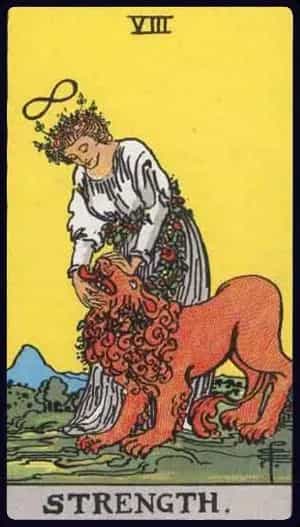
    Strength depicts a woman gently holding open a lion's mouth, symbolizing the power of calm strength over brute force. She wears a white robe with flowers, and above her head is the infinity symbol. The picture as a whole represents mastering emotions and inner courage. The Strength card embodies inner power, patience, and compassionate resilience. It teaches that true strength comes from gentleness and emotional mastery rather than aggression.

  • The Hermit
    Upright
    Introspection · Wisdom · Solitude
    Reversed
    Isolation · Withdrawal · Lack of Guidance

    The Hermit

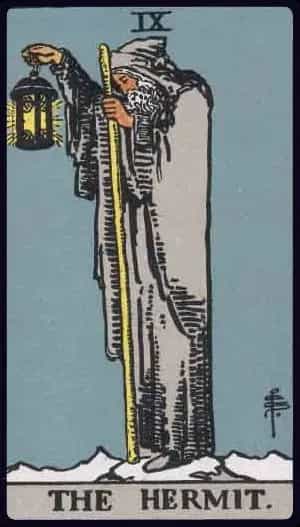
    The Hermit shows an elderly man carrying a lantern, standing on a mountain peak with a staff in hand. He wears a gray cloak and hood, symbolizing wisdom gained through experience. The lantern represents inner light and guidance. Every element embodies the search for deeper truth. The Hermit represents introspection, solitude, and inner wisdom. He encourages seeking guidance from within and taking time for quiet reflection away from external distractions.

  • The Wheel of Fortune
    Upright
    Change · Destiny · Cycles
    Reversed
    Bad Luck · Resistance to Change · Stagnation

    The Wheel of Fortune

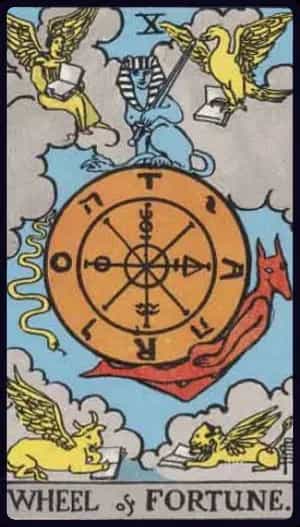
    The Wheel of Fortune shows a large wheel with various symbols including the four elements, Hebrew letters, and mythological figures. At the top sits a sphinx holding a sword, while figures rise and fall with the wheel's turning. The scene represents the cyclical nature of life and destiny. The Wheel of Fortune signifies change, cycles, and the turning of fate. It reminds us that life moves in cycles and encourages embracing change as part of the natural flow of existence.

  • Justice
    Upright
    Fairness · Balance · Truth
    Reversed
    Injustice · Imbalance · Dishonesty

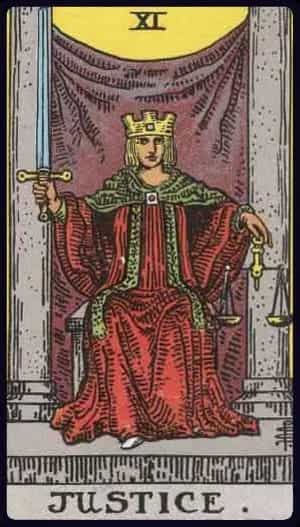
    Justice

    Justice depicts a woman sitting on a throne, holding a sword in one hand and scales in the other. She wears a crown and red robe, with a purple curtain behind her. Every detail symbolizes impartial judgment and the law of cause and effect. The Justice card represents fairness, truth, and moral balance. It encourages accountability for one's actions and decisions, reminding us that justice and harmony come from living in alignment with universal principles.

  • The Hanged Man
    Upright
    Surrender · Perspective · Sacrifice
    Reversed
    Stagnation · Resistance · Unwillingness to Sacrifice

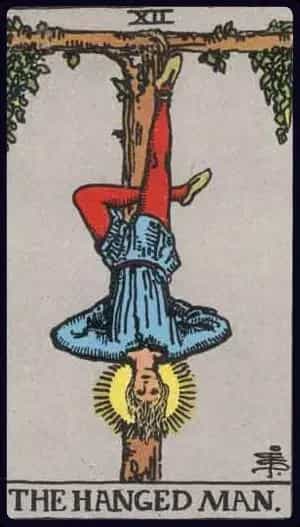
    The Hanged Man

    The Hanged Man shows a man hanging upside down from a T-shaped cross, with a serene expression on his face. His legs form a cross, and there's a halo around his head. The composition represents voluntary sacrifice and gaining new perspectives through surrender. The Hanged Man signifies the need for pause, new viewpoints, and letting go of control. He teaches that sometimes surrendering to a situation brings the clarity and wisdom needed for true progress.

  • Death
    Upright
    Endings · Transformation · New Beginnings
    Reversed
    Resistance to Change · Stagnation · Inability to Let Go

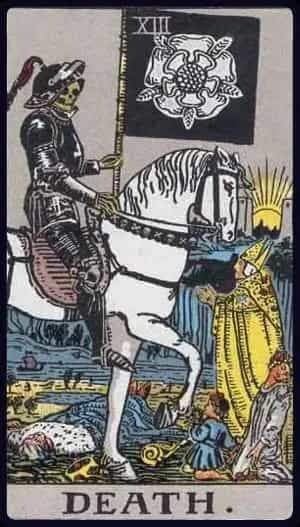
    Death

    Death appears as a skeletal figure in black armor riding a white horse, carrying a black flag with a white rose. The horse tramples over a king, while a bishop, woman, and child plead for mercy. A small boat can be seen in the background, symbolizing the journey to the afterlife. Each symbol represents the natural cycle of endings and beginnings. The Death card signifies transformation, the end of old cycles, and the rebirth that follows. It encourages embracing change and releasing what no longer serves growth, reminding us that endings create space for new beginnings.

  • Temperance
    Upright
    Balance · Harmony · Moderation
    Reversed
    Imbalance · Excess · Lack of Moderation

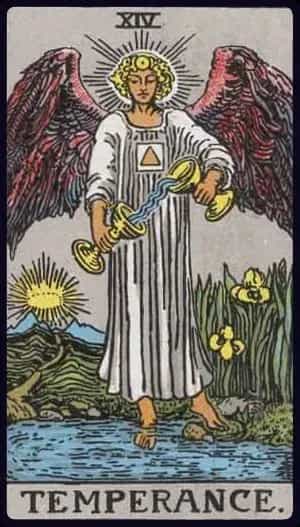
    Temperance

    Temperance shows an angel standing with one foot in water and one on land, pouring liquid between two cups. The angel wears a white robe with a triangle and square symbol, representing the union of opposites. A path leads to mountains in the background with a shining crown above. The tableau symbolizes the harmonious blending of energies. The Temperance card represents balance, moderation, and the alchemy of combining different elements. It encourages patience, healing, and finding the middle path between extremes for harmonious outcomes.

  • The Devil
    Upright
    Bondage · Temptation · Addiction
    Reversed
    Breaking Free · Awakening · Freedom

    The Devil

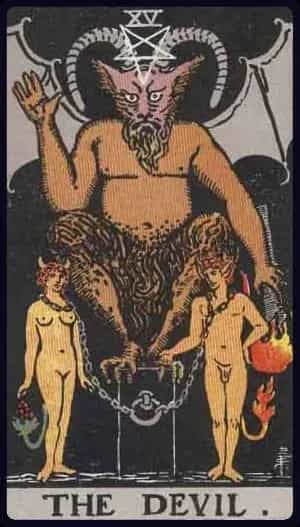
    The Devil appears as a horned figure resembling a satyr, with bat wings and an inverted pentagram on his forehead. He stands on a pedestal, with a man and woman chained to him by loose chains around their necks. The picture as a whole represents self-imposed bondage and material attachments. The Devil card signifies temptation, unhealthy attachments, and the shadow aspects of life. It challenges us to recognize limiting beliefs and patterns that hold us back from true freedom and self-empowerment.

  • The Tower
    Upright
    Upheaval · Sudden Change · Revelation
    Reversed
    Avoiding Upheaval · Resisting Change · Delayed Revelation

    The Tower

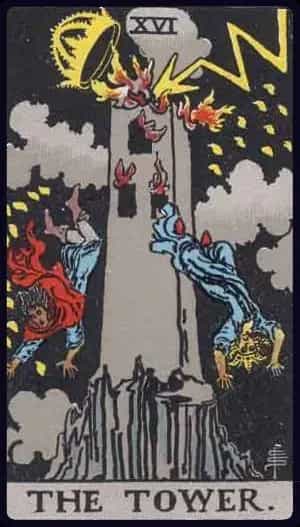
    The Tower shows a tall stone tower being struck by lightning, with flames erupting from the top. Two figures fall from the tower - a man and a woman - as crown-like objects tumble down. This dramatic imagery represents sudden upheaval and revelation. The Tower card signifies sudden change, revelation, and the destruction of false foundations. It reminds us that sometimes structures built on illusion must crumble to make way for authentic growth and truth.

  • The Star
    Upright
    Hope · Inspiration · Healing
    Reversed
    Disappointment · Despair · Lack of Hope

    The Star

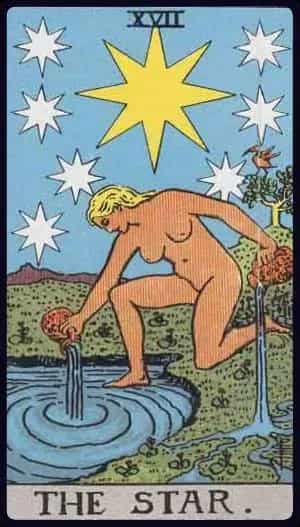
    The Star shows a naked woman kneeling by a pool, pouring water from two pitchers - one into the pool and one onto the earth. Above her shines a large star surrounded by seven smaller stars, with a bird perched on a tree behind her. This serene imagery represents hope and inspiration. The Star card signifies hope, inspiration, and healing after hardship. It encourages renewal, clarity, and trusting in the universe's benevolence during times of uncertainty.

  • The Moon
    Upright
    Illusion · Subconscious · Mystery
    Reversed
    Revealing Truth · Clarity · Overcoming Illusion

    The Moon

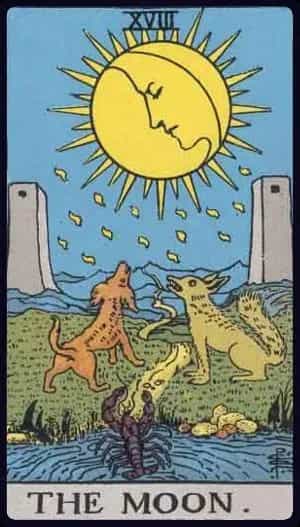
    The Moon depicts a moon face between two towers, with a dog and wolf howling below, and a crayfish emerging from water. A path leads between the towers into mountains. The scene represents the subconscious and hidden truths. The Moon card signifies illusion, the subconscious mind, and mystery. It encourages trusting intuition while navigating confusion and emotional undercurrents.

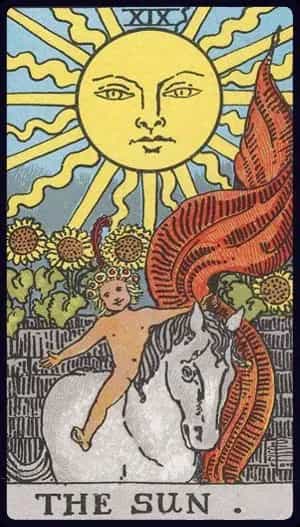
  • The Sun
    Upright
    Joy · Success · Vitality
    Reversed
    Overconfidence · Lack of Awareness · Vanity

    The Sun

    The Sun shows a naked child riding a white horse under a bright sun with a crown of sunflowers. The child holds a red flag, symbolizing vitality and innocence. This joyful imagery represents enlightenment and success. The Sun card signifies joy, success, and vitality. It celebrates personal growth, achievements, and the positive energy that illuminates life's path with clarity and optimism.

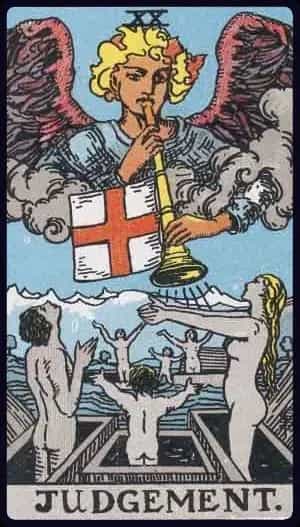
  • Judgement
    Upright
    Awakening · Judgment · Renewal
    Reversed
    Resisting Judgment · Avoiding Responsibility · Unable to Renew

    Judgement

    Judgement shows an angel blowing a trumpet from the clouds, with naked figures rising from coffins below - a man, woman, and child. Every detail represents awakening and rebirth. The Judgement card signifies awakening, renewal, and self-evaluation. It heralds a call to higher purpose and the opportunity for rebirth after honest reflection on one's journey.

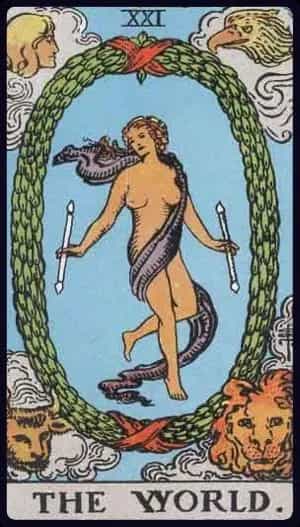
  • The World
    Upright
    Completion · Integration · Celebration
    Reversed
    Incomplete · Fragmented · Dissatisfaction

    The World

    The World shows a naked woman dancing within a laurel wreath, holding wands in each hand. In the four corners are the symbols of the four evangelists - a lion, bull, eagle, and angel. The composition represents completion and wholeness. The World card signifies ultimate completion, achievement, and the integration of all life experiences. It represents the successful conclusion of a journey and the harmonious integration of all aspects of existence.

Minor Arcana

Suit of Wands

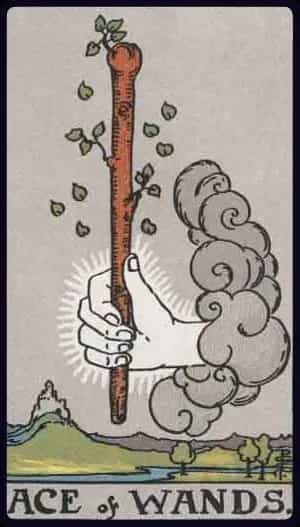
  • Ace of Wands
    Upright
    Inspiration Burst · Action Power · Courage
    Reversed
    Insufficient Motivation · Hesitation · Procrastination

    Ace of Wands

    The Ace of Wands shows a single wand sprouting leaves and flowers, held aloft by a hand emerging from clouds with a castle in the background. The scene represents the spark of creation and new beginnings. The Ace of Wands signifies inspiration, passion, and the raw energy of creativity. It represents the excitement of fresh ventures and bold action.

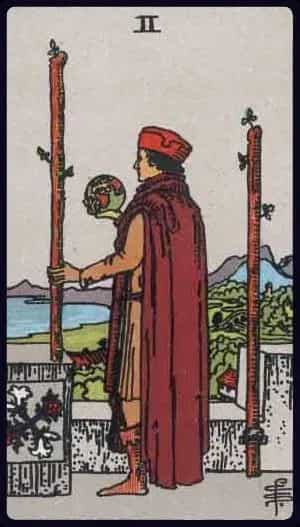
  • Two of Wands
    Upright
    Vision Planning · Strategic Decision · Self-Control
    Reversed
    Indecision · Plan Stagnation · Limited Vision

    Two of Wands

    The Two of Wands shows a figure standing on a balcony overlooking the sea, holding a globe in one hand and a wand in the other, with ships sailing in the background. Every detail represents strategic planning and expanded vision. The Two of Wands signifies courage, decision-making, and the exploration of new possibilities. It represents the moment of recognizing potential and planning for future growth.

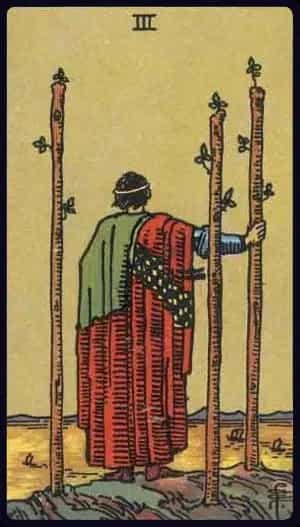
  • Three of Wands
    Upright
    Voyage Expansion · Confidence · Cooperation
    Reversed
    Delay · Resource Constraints · Coordination Imbalance

    Three of Wands

    The Three of Wands shows a figure standing on a cliff overlooking the sea, watching ships sail away with three wands planted firmly in the ground. The composition represents expansion and progress. The Three of Wands signifies achievement, exploration, and the anticipation of success. It represents the fruitful results of groundwork and the confidence to pursue broader ventures.

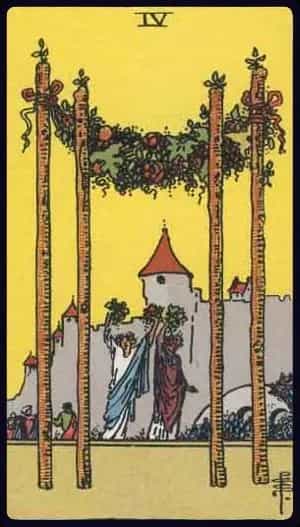
  • Four of Wands
    Upright
    Celebration · Stable Foundation · Sense of Belonging
    Reversed
    Unity Blocked · Celebration Delayed · Family Discord

    Four of Wands

    The Four of Wands shows four wands forming an arch decorated with flowers and fruits, with figures dancing beneath them in celebration. Each symbol represents celebration and harmony. The Four of Wands signifies homecoming, stability, and joyful milestones. It represents the fulfillment of hard work and the celebration of communal achievements.

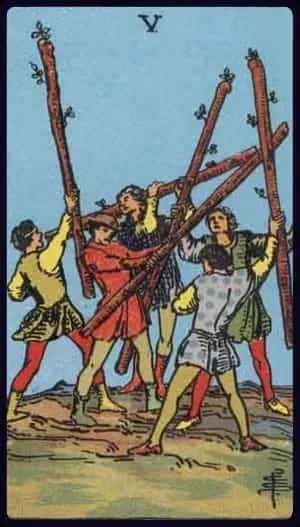
  • Five of Wands
    Upright
    Competitive Energy · Team Dynamics · Trial
    Reversed
    Escalating Conflict · Internal Tension · Deadlock

    Five of Wands

    The Five of Wands shows five figures engaged in mock battle with wands, appearing chaotic and competitive. The tableau represents conflict and struggle. The Five of Wands signifies competition, challenge, and the energy of conflict. It represents situations where multiple forces are striving for dominance, creating tension that can stimulate growth.

  • Six of Wands
    Upright
    Triumphant Return · Public Recognition · Leadership
    Reversed
    Disappointment · Excessive Pride · Unmet Expectations

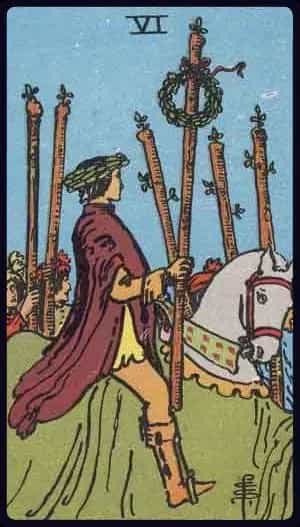
    Six of Wands

    The Six of Wands shows a victorious figure on horseback, wearing a laurel crown and holding a wand, with followers cheering below. The picture as a whole represents victory and recognition. The Six of Wands signifies triumph, success, and public acknowledgment. It represents the achievement of goals and the celebration of well-deserved victory.

  • Seven of Wands
    Upright
    Standing Your Ground · Defense · Brave Expression
    Reversed
    Over-Defensiveness · Isolation · Self-Doubt

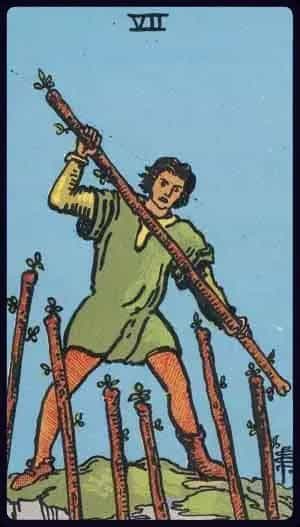
    Seven of Wands

    The Seven of Wands shows a figure defending themselves against six wands from below, standing on higher ground. The scene represents defense and perseverance. The Seven of Wands signifies courage, resilience, and the need to defend your position. It represents standing your ground against challenges and maintaining convictions with determination.

  • Eight of Wands
    Upright
    Swift Action · Communication · Breakthrough
    Reversed
    Delay · Information Chaos · Stalled Progress

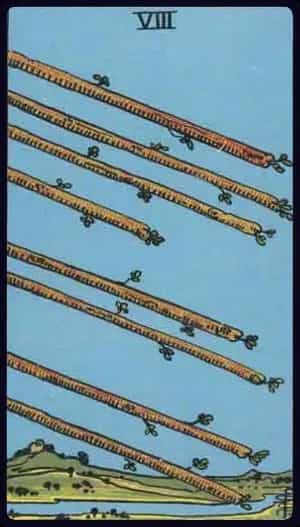
    Eight of Wands

    The Eight of Wands shows eight wands flying through the air over a landscape with a river and castle. Every detail represents speed and rapid progress. The Eight of Wands signifies swift movement, momentum, and the acceleration of events. It represents the clearing of obstacles and the rapid advancement toward goals.

  • Nine of Wands
    Upright
    Tenacity · Defense · Experience
    Reversed
    Exhaustion · Excessive Suspicion · Paranoia

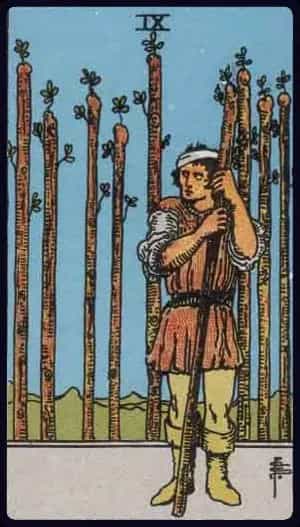
    Nine of Wands

    The Nine of Wands shows a wounded figure standing with a bandage around his head, supporting himself with a staff while eight wands stand upright behind him. The composition represents resilience and defense. The Nine of Wands signifies perseverance, endurance, and the courage to continue despite setbacks. It represents the determination needed to overcome obstacles and the wisdom gained through experience.

  • Ten of Wands
    Upright
    Burden · Responsibility · Goal Achievement
    Reversed
    Overwork · Unable to Bear · Failed Delegation

    Ten of Wands

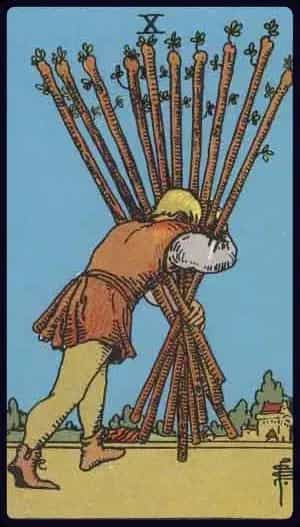
    The Ten of Wands shows a figure carrying ten heavy wands, bent over with effort, approaching a house in the distance. Each symbol represents burden and exhaustion. The Ten of Wands signifies the overwhelming load of responsibilities and the need to reassess one's burdens. It represents the exhaustion that comes from overcommitting and the importance of delegation and balance.

  • Page of Wands
    Upright
    Inspiration Budding · Exploration · Self-Expression
    Reversed
    Impulsiveness · Short-Lived Enthusiasm · Lack of Direction

    Page of Wands

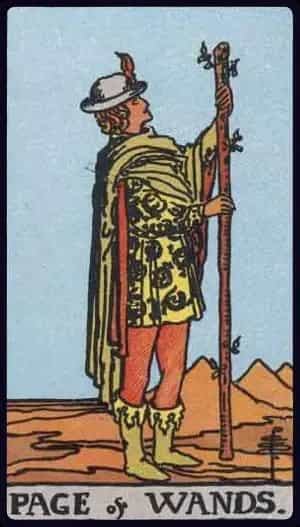
    The Page of Wands shows a young figure standing in a desert landscape, holding a wand aloft with a pyramid in the background. The picture as a whole represents youthful energy and exploration. The Page of Wands signifies enthusiasm, creativity, and the spark of new adventures. It represents the beginning stages of creative pursuits and the excitement of stepping into the unknown.

  • Knight of Wands
    Upright
    Adventurous Spirit · Quick Action · Leadership Passion
    Reversed
    Impulsive Recklessness · Irresponsibility · Abandonment

    Knight of Wands

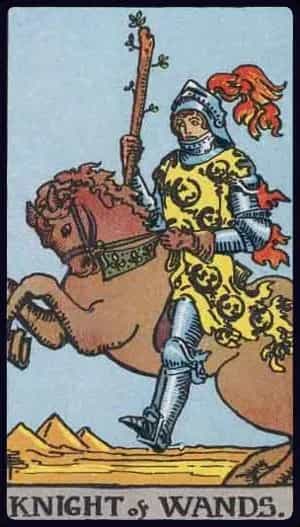
    The Knight of Wands shows a knight on a white horse, wearing a salamander-embroidered tunic, with a pyramid and palm trees in the background. Every detail represents passion and adventure. The Knight of Wands signifies bravery, energy, and the pursuit of bold goals. He embodies the spirit of adventure and the courage to chase dreams with enthusiasm.

  • Queen of Wands
    Upright
    Confident Charm · Passionate Leadership · Social Attraction
    Reversed
    Jealousy · Manipulation · Emotional Imbalance

    Queen of Wands

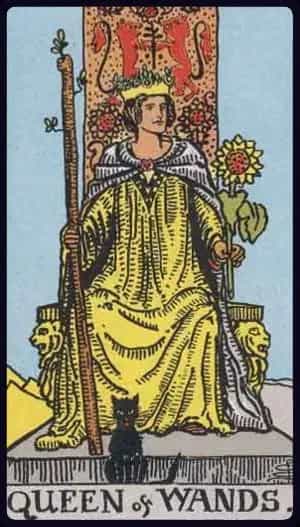
    The Queen of Wands shows a queen seated on a throne adorned with lions, holding a sunflower and a wand, with a black cat at her feet. Every detail represents confidence and passion. The Queen of Wands signifies charismatic leadership, independence, and creative power. She embodies the strength of self-assurance and the warmth of genuine passion.

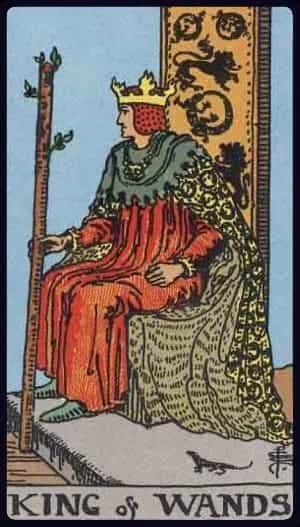
  • King of Wands
    Upright
    Visionary Leadership · Strategic Insight · Brave Expansion
    Reversed
    Control Issues · Impatience · Dictatorship

    King of Wands

    The King of Wands shows a king seated on a throne adorned with salamanders and lions, holding a blossoming wand, with a salamander and lion at his feet. Each symbol represents visionary leadership and inspiration. The King of Wands signifies entrepreneurial spirit, authority, and inspired action. He embodies the mastery of creative energy and the ability to lead with vision and passion.

Suit of Cups

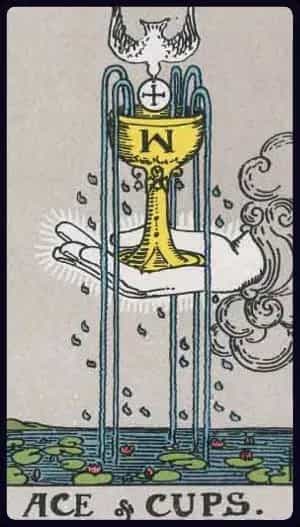
  • Ace of Cups
    Upright
    New Beginnings · Emotion · Inspiration
    Reversed
    Emotional Blockage · Inspiration Withering · Closed

    Ace of Cups

    The Ace of Cups shows a single cup held aloft by a hand emerging from clouds, with water overflowing from the cup and forming a pool below. A dove holds a communion wafer in its beak above the cup, and a white lotus floats on the water. Each symbol represents pure emotional potential and spiritual blessing. The Ace of Cups signifies new emotional beginnings, overflowing love, and creative inspiration. It represents a wellspring of intuition and heart-centered opportunities ready to manifest in your life.

  • Two of Cups
    Upright
    Harmony · Cooperation · Love
    Reversed
    Misunderstanding · Conflict · Communication Barriers

    Two of Cups

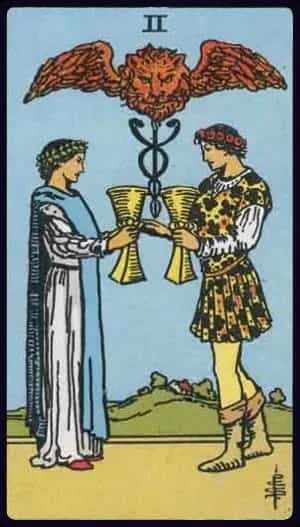
    The Two of Cups shows a man and woman exchanging cups beneath a caduceus symbol, with a lion's head above them. The imagery represents partnership and mutual exchange. The Two of Cups signifies romantic partnerships, emotional harmony, and the blending of energies between two people. It represents the magic of attraction and the formation of meaningful connections built on equality and understanding.

  • Three of Cups
    Upright
    Celebration · Unity · Friendship
    Reversed
    Loneliness · Division · Social Friction

    Three of Cups

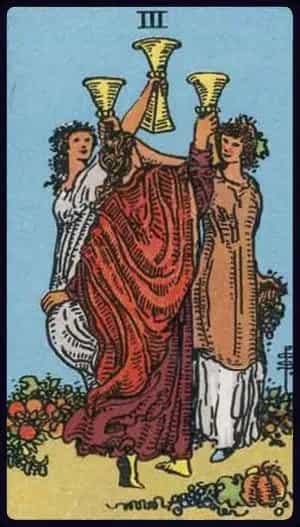
    The Three of Cups depicts three women dancing in a circle, holding raised cups, with fruit falling around them. The tableau symbolizes celebration and communal joy. The Three of Cups represents friendship, community, and the warmth of social connections. It celebrates emotional abundance, creative collaboration, and the happiness that comes from supportive relationships and shared experiences.

  • Four of Cups
    Upright
    Introspection · Contemplation · Discontent
    Reversed
    Emotional Low · Loss of Motivation · Lack of Passion

    Four of Cups

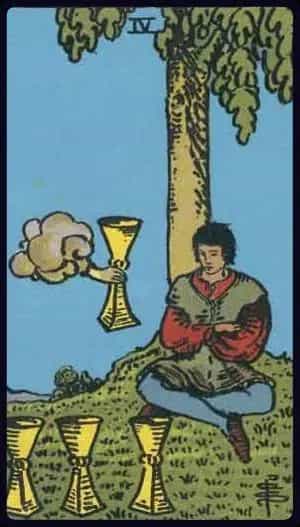
    The Four of Cups shows a figure sitting beneath a tree with arms crossed, gazing at three spilled cups while a fourth cup is offered by a hand from clouds. The picture as a whole represents discontent and missed opportunities. The Four of Cups signifies emotional reflection, discontent, and the need for re-evaluation. It represents feelings of apathy or withdrawal, urging one to look beyond current disappointments toward new possibilities.

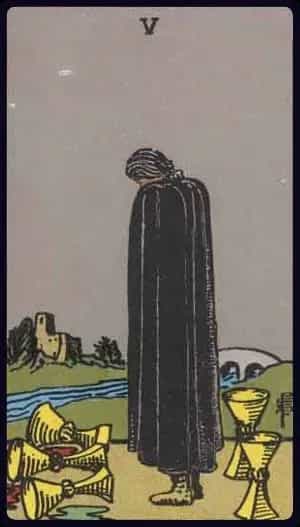
  • Five of Cups
    Upright
    Loss · Sorrow · Regret
    Reversed
    Obsession · Unable to Let Go · Obstruction

    Five of Cups

    The Five of Cups shows a figure in black mourning clothes looking at three spilled cups, while two upright cups remain behind them. A bridge leads to a castle in the distance. The scene represents loss and grief. The Five of Cups signifies mourning, regret, and the pain of loss. It acknowledges sorrow while reminding that not all is lost and recovery is possible through focusing on what remains.

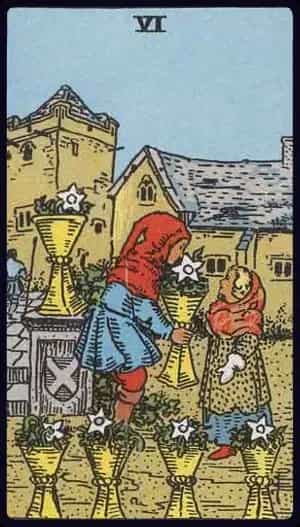
  • Six of Cups
    Upright
    Kindness · Memories · Childhood
    Reversed
    Living in the Past · Immaturity · Inability to Move Forward

    Six of Cups

    The Six of Cups shows a young boy offering a flower to a young girl, with five cups in the background and a sixth cup in the boy's hand. Every detail represents innocence and childhood memories. The Six of Cups signifies nostalgia, emotional innocence, and the joy of simple pleasures. It encourages reconnecting with the purity of childhood and finding happiness in heartfelt connections.

  • Seven of Cups
    Upright
    Fantasy · Choices · Temptation
    Reversed
    Chaos · Illusion · Unable to Discern

    Seven of Cups

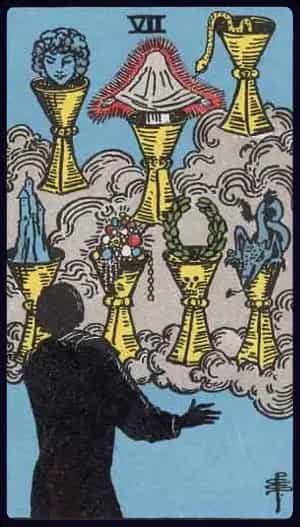
    The Seven of Cups shows a figure facing seven cups floating in clouds, each containing different symbols representing illusions and possibilities. The composition represents choices and fantasy. The Seven of Cups signifies dreams, illusions, and the challenge of discerning reality from fantasy. It encourages careful evaluation when faced with multiple options and possibilities.

  • Eight of Cups
    Upright
    Abandonment · Departure · Exploration
    Reversed
    Fear of Change · Inability to Let Go · Stagnation

    Eight of Cups

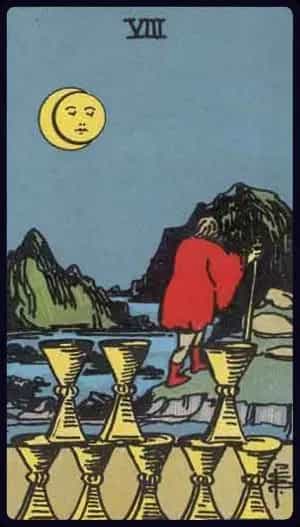
    The Eight of Cups shows a figure walking away from eight stacked cups under a moonlit sky, heading toward mountains. Each symbol represents departure and transition. The Eight of Cups signifies emotional transition, leaving behind what no longer serves growth, and embarking on a journey toward deeper meaning and fulfillment.

  • Nine of Cups
    Upright
    Wish Fulfillment · Satisfaction · Celebration
    Reversed
    Dissatisfaction · Unfulfilled Wishes · Overindulgence

    Nine of Cups

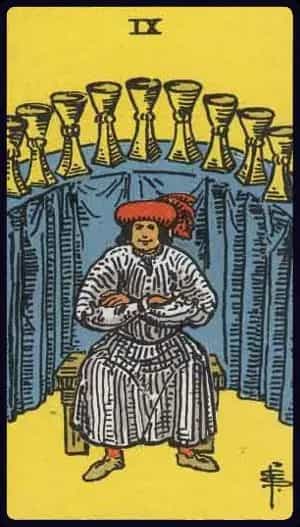
    The Nine of Cups shows a satisfied figure seated before nine cups arranged in an arch, with arms crossed in contentment. The tableau represents satisfaction and fulfillment. The Nine of Cups signifies emotional satisfaction, wish fulfillment, and the joy that comes from having one's heartfelt desires realized.

  • Ten of Cups
    Upright
    Emotional Fulfillment · Family Happiness · Harmony
    Reversed
    Emotional Conflict · Family Discord · Unrealistic Expectations

    Ten of Cups

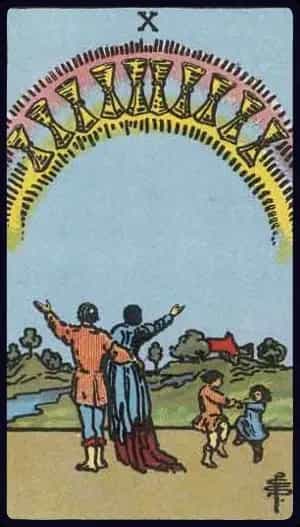
    The Ten of Cups shows a family beneath a rainbow with ten cups arranged in an arch above them. The picture as a whole represents ultimate happiness and harmony. The Ten of Cups signifies family happiness, emotional fulfillment, and the joy of harmonious relationships and lasting emotional bonds.

  • Page of Cups
    Upright
    Emotional Awakening · Intuition · Dreams
    Reversed
    Emotional Immaturity · Closed · Lack of Inspiration

    Page of Cups

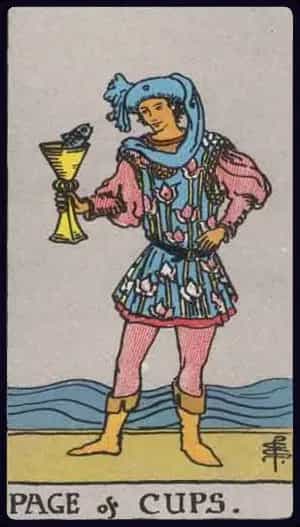
    The Page of Cups shows a young figure holding a cup with a fish emerging from it, standing by water. The composition represents innocence and intuition. The Page of Cups signifies emotional openness, creativity, and the awakening of intuitive potential. It brings messages of love and creative inspiration.

  • Knight of Cups
    Upright
    Romance · Sensitivity · Exploration
    Reversed
    Emotional Fluctuation · Idealization · Impulsiveness

    Knight of Cups

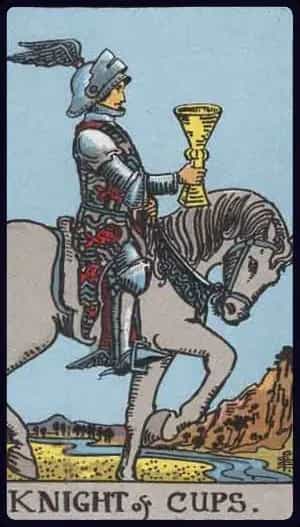
    The Knight of Cups shows a knight on a white horse offering a cup, with wings on his helmet and shoes. The tableau represents romantic idealism and emotional pursuit. The Knight of Cups signifies romantic dreams, creative inspiration, and the pursuit of heartfelt quests. He brings messages of love and emotional opportunities.

  • Queen of Cups
    Upright
    Emotional Maturity · Intuition · Care
    Reversed
    Emotional Dependence · Emotional Instability · Overly Sensitive

    Queen of Cups

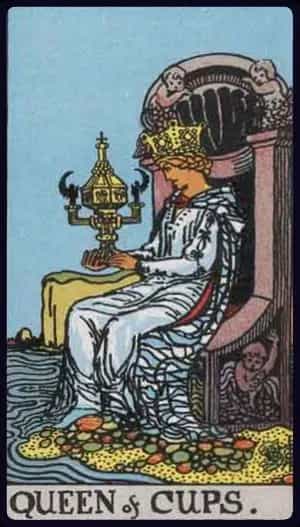
    The Queen of Cups shows a queen seated on a throne by water, holding a cup with handles shaped like angels. The tableau represents compassion and emotional wisdom. The Queen of Cups signifies deep intuition, empathy, and the nurturing aspect of emotional intelligence. She embodies the power of emotional healing and compassionate understanding.

  • King of Cups
    Upright
    Emotional Balance · Leadership · Wisdom
    Reversed
    Emotional Suppression · Emotional Manipulation · Lack of Balance

    King of Cups

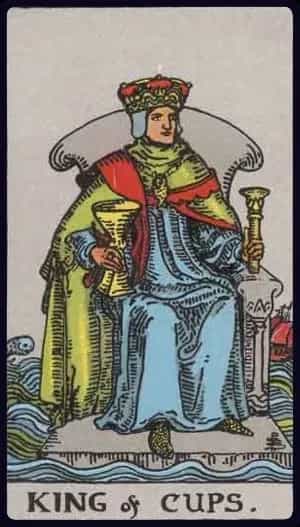
    The King of Cups shows a king seated on a throne at sea, holding a cup and scepter, with fish jumping around him. The scene represents emotional mastery and leadership. The King of Cups signifies emotional balance, wise leadership, and the ability to navigate emotional waters with stability and compassion.

Suit of Swords

  • Ace of Swords
    Upright
    Clear Thinking · Truth · Insight
    Reversed
    Confusion · Hesitation · Communication Blockage

    Ace of Swords

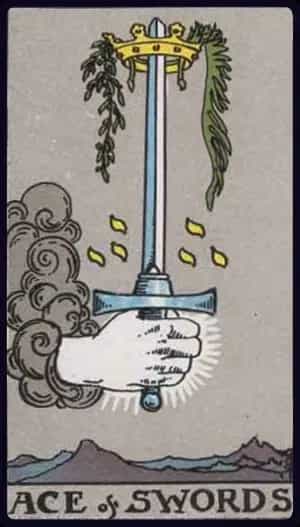
    The Ace of Swords shows a single sword held aloft by a hand emerging from clouds, with a crown and wreath symbolizing victory and peace. The composition represents mental clarity and decisive action. The Ace of Swords signifies breakthroughs, truth, and the power of clear thinking. It represents the illumination of confusion and the courage to make difficult choices.

  • Two of Swords
    Upright
    Weighing Options · Deferring Decision · Balanced Mind
    Reversed
    Deadlock Broken · Chaos · Anxiety

    Two of Swords

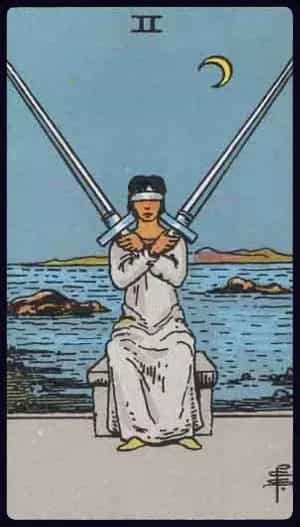
    The Two of Swords shows a blindfolded woman seated with two crossed swords behind her, with a crescent moon in the background. Each symbol represents indecision and mental stalemate. The Two of Swords signifies a need for balance in decision-making and the challenge of conflicting ideas. It suggests that clarity comes from thoughtful reflection and weighing options carefully.

  • Three of Swords
    Upright
    Heartbreak · Painful Truth · Emotional Release
    Reversed
    Healing · Letting Go · Recovery

    Three of Swords

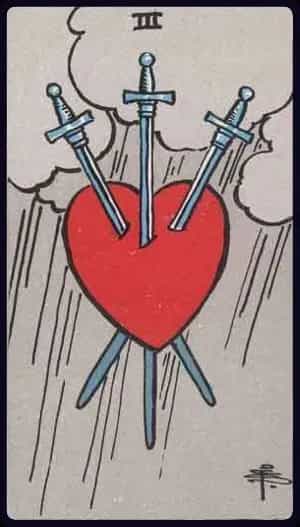
    The Three of Swords shows three swords piercing a heart, with storm clouds in the background. The tableau represents emotional pain and heartbreak. The Three of Swords signifies sorrow, grief, and the painful process of emotional healing. It represents the necessity of processing emotional wounds for personal growth and resilience.

  • Four of Swords
    Upright
    Rest · Healing · Quiet Retreat
    Reversed
    Returning to Action · Insufficient Rest · Anxiety Resurgence

    Four of Swords

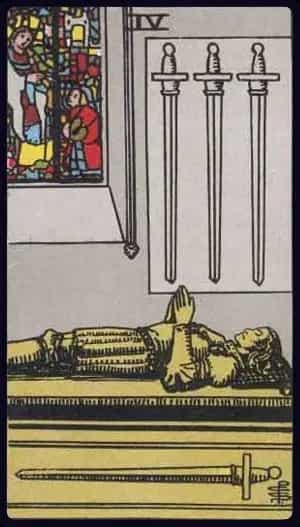
    The Four of Swords shows a knight lying on a tomb-like structure with three swords above him and one below, in a stained glass window setting. The picture as a whole represents rest and recovery. The Four of Swords signifies the need for rest, contemplation, and mental healing after periods of stress. It encourages mindful retreat and restoration of energy before proceeding.

  • Five of Swords
    Upright
    Dishonorable Victory · Self-Centered · Strategic Confrontation
    Reversed
    Reconciliation · Letting Go of Disputes · Self-Reflection

    Five of Swords

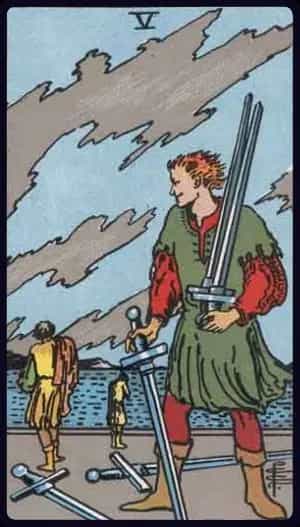
    The Five of Swords shows a smirking figure holding three swords while two defeated figures walk away, leaving their swords behind. The scene represents conflict and dishonorable victory. The Five of Swords signifies defeat, ego-driven battles, and the cost of winning at any price. It warns against conflicts that may result in pyrrhic victories and encourages choosing battles wisely.

  • Six of Swords
    Upright
    Transition Journey · Leaving Difficulties · Restoring Balance
    Reversed
    Hesitation · Stagnation · Unable to Let Go

    Six of Swords

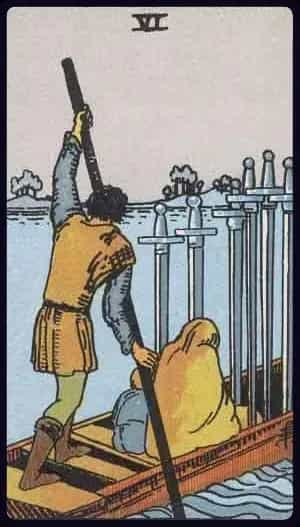
    The Six of Swords shows a ferryman rowing a woman and child across calm waters, with six swords in the boat and turbulent waters behind them. Every detail represents transition and moving toward calmer waters. The Six of Swords signifies healing, recovery, and progress away from difficulties. It represents the journey toward brighter shores and renewed hope.

  • Seven of Swords
    Upright
    Strategy · Caution · Covert Action
    Reversed
    Exposure · Facing Truth · Returning Responsibility

    Seven of Swords

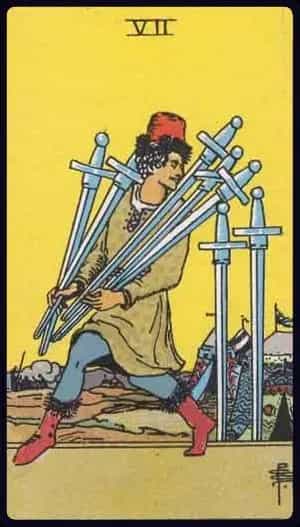
    The Seven of Swords shows a figure sneaking away with five swords while two remain stuck in the ground. The composition represents deception and strategic thinking. The Seven of Swords signifies cleverness, strategy, and sometimes deceit. It suggests situations requiring stealth or non-conventional approaches, while warning against unethical behavior.

  • Eight of Swords
    Upright
    Self-Binding · Fear · Limited Perspective
    Reversed
    Liberation · Self-Awareness · Breakthrough

    Eight of Swords

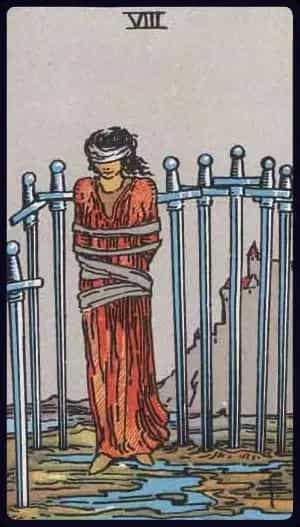
    The Eight of Swords shows a blindfolded woman bound with ropes, surrounded by eight swords forming a circle. Each symbol represents mental entrapment and self-imposed limitations. The Eight of Swords signifies feelings of restriction, fear, and confinement. It suggests that the barriers are often more mental than physical and encourages challenging limiting beliefs.

  • Nine of Swords
    Upright
    Insomnia · Anxiety · Guilt
    Reversed
    Letting Go · Healing · Seeking Support

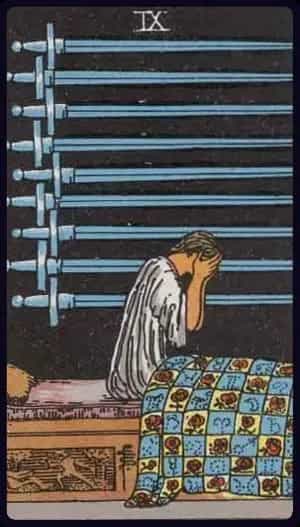
    Nine of Swords

    The Nine of Swords shows a person sitting up in bed with nine swords hanging on the wall behind them, covering their face in despair. The tableau represents deep anxiety and mental anguish. The Nine of Swords signifies fear, anxiety, and emotional suffering. It represents overwhelming worry and the need to confront fears for emotional liberation.

  • Ten of Swords
    Upright
    Ending · Painful Release · Recognizing Truth
    Reversed
    Rebirth · Recovery · Life Returning

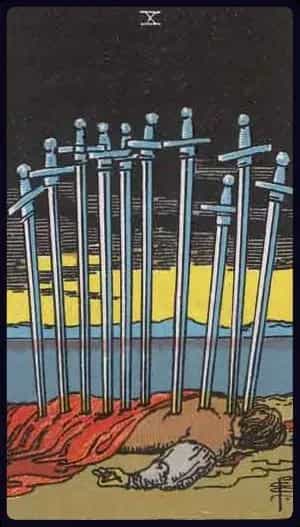
    Ten of Swords

    The Ten of Swords shows a figure lying face down with ten swords in their back, under a dark sky with a faint light suggesting dawn. The picture as a whole represents painful endings and collapse. The Ten of Swords signifies betrayal, painful endings, and transformation. It represents the conclusion of a difficult cycle and the promise of rebirth beyond the pain.

  • Page of Swords
    Upright
    Curiosity · Seeking Knowledge · Sharp Insight
    Reversed
    Overthinking · Gossip · Impulsive Speech

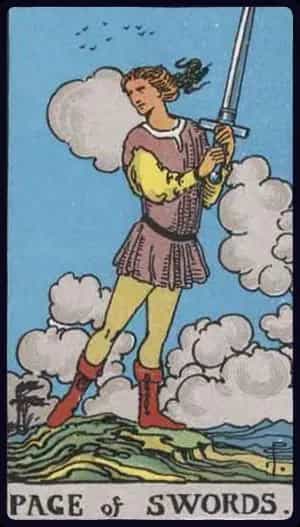
    Page of Swords

    The Page of Swords shows a young figure holding a sword aloft, standing alert with wind blowing through their hair. The tableau represents youthful curiosity and sharp intellect. The Page of Swords signifies mental agility, communication, and a thirst for truth. It reflects eagerness to learn and challenge assumptions.

  • Knight of Swords
    Upright
    Swift Action · Execution · Strategic Advancement
    Reversed
    Recklessness · Sharp Communication · Ignoring Details

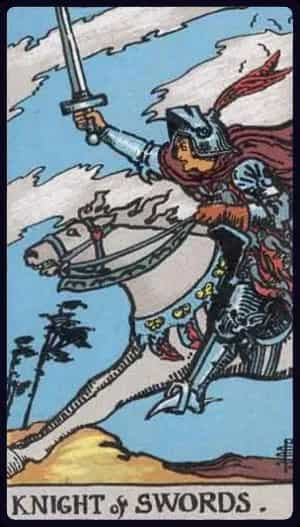
    Knight of Swords

    The Knight of Swords shows a knight charging forward on a white horse, holding a sword aloft with great speed and determination. The scene represents ambition and bold action. The Knight of Swords signifies swift movement, determination, and cutting through obstacles with fierce focus. It represents the drive to move forward rapidly and decisively.

  • Queen of Swords
    Upright
    Rational Judgment · Independent Decision-Making · Honest Communication
    Reversed
    Sharp · Harsh · Over-Defensive

    Queen of Swords

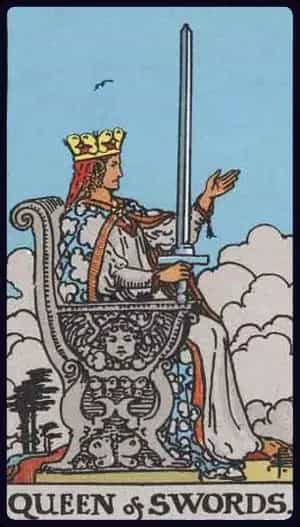
    The Queen of Swords shows a queen seated on a throne with a stern expression, holding a sword upright and a butterfly symbol on her crown. The scene represents sharp intellect and clarity. The Queen of Swords signifies wisdom, independence, and unflinching honesty. She embodies the power of unbiased judgment and truth-seeking.

  • King of Swords
    Upright
    Authoritative Judgment · Fair Logic · Strategic Wisdom
    Reversed
    Dictatorial · Power Abuse · Rigid Logic

    King of Swords

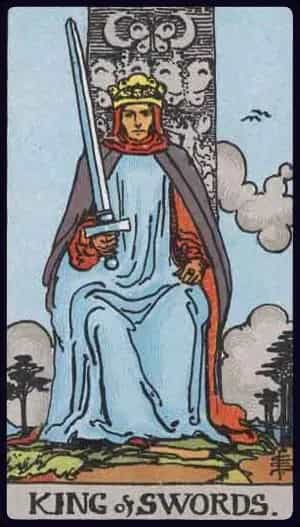
    The King of Swords shows a king seated on a throne, holding a sword upright with butterflies on his crown and robe. The composition represents intellectual authority and integrity. The King of Swords signifies strategic leadership, truth, and unwavering integrity. He embodies mastery over reason, law, and clear communication.

Suit of Pentacles

  • Ace of Pentacles
    Upright
    New Beginning · Finance · Investment
    Reversed
    Financial Risk · Missed Opportunities · Unrealistic

    Ace of Pentacles

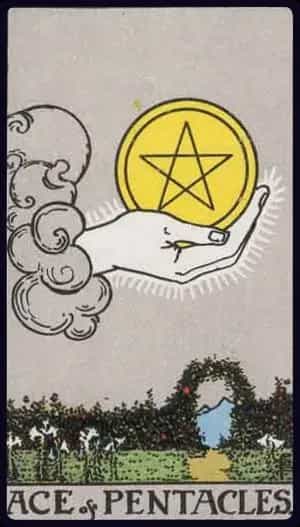
    The Ace of Pentacles shows a single pentacle held aloft by a hand emerging from clouds, with a garden path leading to mountains in the background. The scene represents new beginnings in the material realm. The Ace of Pentacles signifies fresh opportunities for financial growth, career advancement, and tangible success. It represents the potential for prosperity and the foundation for lasting achievements.

  • Two of Pentacles
    Upright
    Balance · Adaptation · Decision-Making
    Reversed
    Indecisiveness · Imbalance · Chaos

    Two of Pentacles

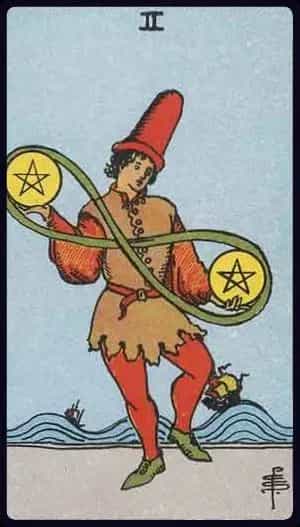
    The Two of Pentacles shows a figure juggling two pentacles connected by an infinity symbol, with ships in turbulent waters in the background. Every detail represents balance and adaptability. The Two of Pentacles signifies the need to manage competing demands skillfully while maintaining flexibility and resilience. It suggests that success lies in juggling priorities and staying centered amid life's constant changes.

  • Three of Pentacles
    Upright
    Cooperation · Skill · Construction
    Reversed
    Lack of Cooperation · Poor Skills · Disorganization

    Three of Pentacles

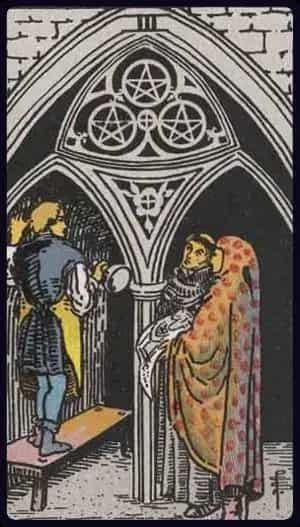
    The Three of Pentacles shows a sculptor working on a cathedral with two figures - a monk and a nobleman - observing his work. The composition represents collaboration and skilled craftsmanship. The Three of Pentacles celebrates teamwork, mastery, and the recognition that comes from collaborative success. It signifies progress through cooperation and the blending of diverse skills for shared achievements.

  • Four of Pentacles
    Upright
    Financial Security · Control · Stability
    Reversed
    Obsession · Hoarding · Uncontrolled Spending

    Four of Pentacles

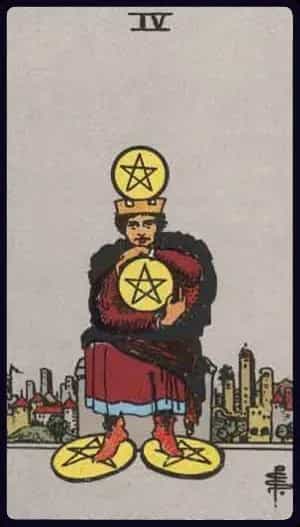
    The Four of Pentacles shows a figure seated on a throne, clutching a pentacle to their chest while two more pentacles rest under their feet, with a fourth pentacle balanced on their head. Each symbol represents material security and possessiveness. The Four of Pentacles signifies a desire to protect assets and maintain control, though it may also indicate rigidity or resistance to change. It represents the balance between security and the need for flexibility.

  • Five of Pentacles
    Upright
    Scarcity · Isolation · Financial Pressure
    Reversed
    Turning Point · Support · Recovery

    Five of Pentacles

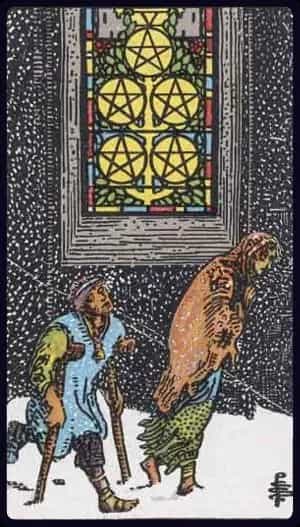
    The Five of Pentacles shows two figures in ragged clothing limping past a church window, with snow falling around them. The tableau represents material hardship and isolation. The Five of Pentacles symbolizes financial or physical struggles, but also reminds that help is available if one seeks it. It represents a period of adversity that can be overcome through perseverance and reaching out for support.
  • Six of Pentacles
    Upright
    Giving · Reciprocity · Resource Balance
    Reversed
    Imbalance · Manipulation · Over-Giving

    Six of Pentacles

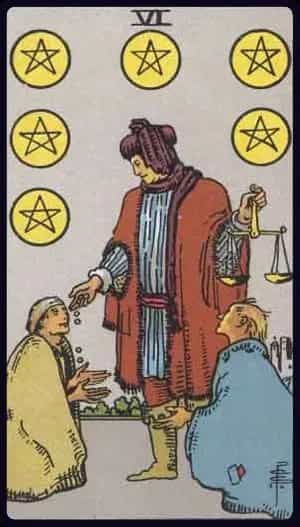
    The Six of Pentacles shows a wealthy merchant distributing coins to two beggars with scales of justice in the background. The picture as a whole represents the balance of giving and receiving. The Six of Pentacles highlights generosity, fairness, and mutual support. It suggests that abundance should be shared wisely, promoting balance in financial and emotional exchanges.
  • Seven of Pentacles
    Upright
    Patience · Investment Evaluation · Long-Term Planning
    Reversed
    Restlessness · Short-Sightedness · Delayed Results

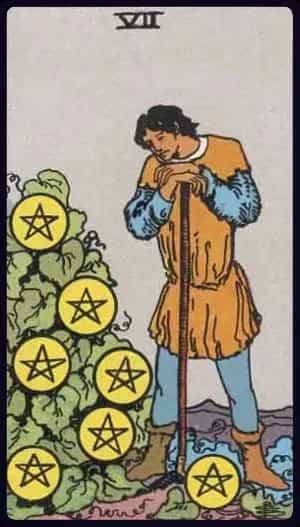
    Seven of Pentacles

    The Seven of Pentacles shows a gardener resting on his hoe, contemplating a bush laden with pentacles. The scene represents patience and evaluation of growth. The Seven of Pentacles emphasizes the importance of patience, careful evaluation, and nurturing long-term growth. It suggests that efforts are bearing fruit but require sustained dedication for full harvest.

  • Eight of Pentacles
    Upright
    Focused Practice · Skill Improvement · Diligence
    Reversed
    Burnout · Lack of Motivation · Carelessness

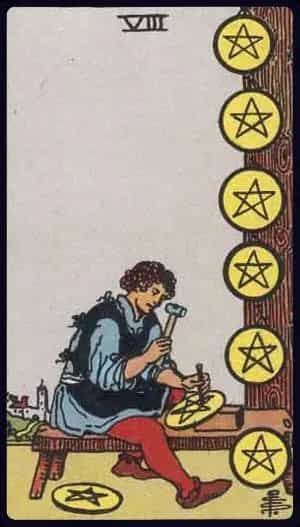
    Eight of Pentacles

    The Eight of Pentacles shows a craftsman diligently working on pentacles, with completed ones hanging on a wall behind him. Every detail represents diligence and skill development. The Eight of Pentacles is a testament to hard work, craftsmanship, and mastery through consistent practice. It signifies dedication to honing one's craft and the rewards of persistent effort.

  • Nine of Pentacles
    Upright
    Independence · Harvest · Elegant Living
    Reversed
    Surface Gloss · Dependency on Others · Resource Abuse

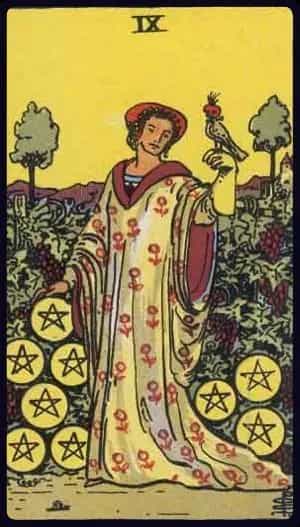
    Nine of Pentacles

    The Nine of Pentacles shows a woman in luxurious robes standing in a vineyard with a hooded falcon on her arm. The composition represents self-sufficiency and the rewards of hard work. The Nine of Pentacles celebrates independence, success, and the luxury that comes from disciplined effort. It signifies material abundance and the confidence earned through personal achievement.

  • Ten of Pentacles
    Upright
    Family Wealth · Legacy · Long-Term Stability
    Reversed
    Family Conflict · Value Clashes · Financial Instability

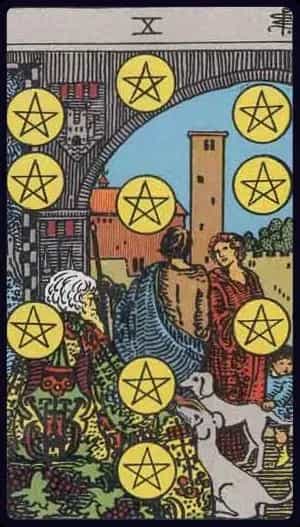
    Ten of Pentacles

    The Ten of Pentacles shows an elderly man with two dogs at his feet, surrounded by family members and a castle in the background with ten pentacles arranged in a Tree of Life pattern. Each symbol represents lasting wealth and family legacy. The Ten of Pentacles signifies enduring prosperity, family stability, and the culmination of generations of hard work. It represents material and emotional security passed down through family and tradition.

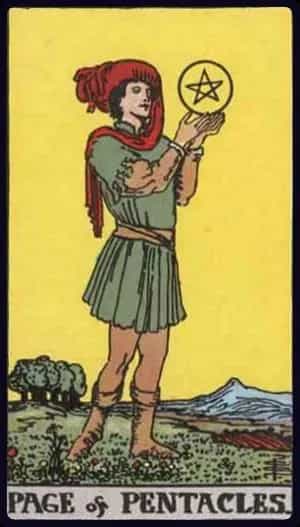
  • Page of Pentacles
    Upright
    Practical Learning · Exploring Opportunities · Steady Start
    Reversed
    Lack of Focus · Insufficient Commitment · Procrastination

    Page of Pentacles

    The Page of Pentacles shows a young figure standing in a field, contemplating a pentacle held aloft. Each symbol represents curiosity and the beginnings of practical ventures. The Page of Pentacles symbolizes learning, opportunity, and the fertile ground for new practical pursuits. It signifies the excitement of setting plans into motion with dedication and focus.

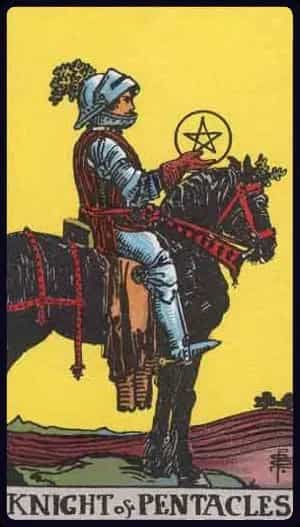
  • Knight of Pentacles
    Upright
    Steady Execution · Diligence · Responsibility
    Reversed
    Procrastination · Stubbornness · Stagnation

    Knight of Pentacles

    The Knight of Pentacles shows a knight on a black horse, holding a pentacle, with a plowed field in the background. The picture as a whole represents steadfast dedication and methodical progress. The Knight of Pentacles embodies persistence, responsibility, and unwavering commitment to practical goals. He signifies the rewards of careful planning and consistent effort.

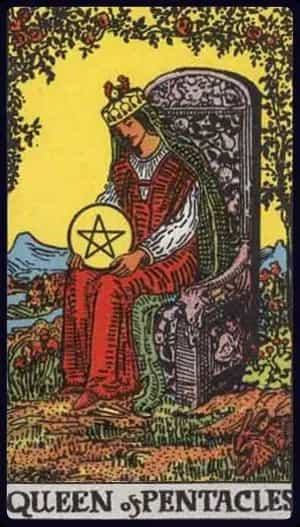
  • Queen of Pentacles
    Upright
    Abundance · Care · Practicality
    Reversed
    Overwork · Self-Neglect · Material Obsession

    Queen of Pentacles

    The Queen of Pentacles shows a queen seated on a throne adorned with fruit and flowers, holding a pentacle, with a rabbit at her feet. The picture as a whole represents nurturing abundance and practical wisdom. The Queen of Pentacles embodies the graceful management of resources and the harmonious blend of material success with emotional generosity. She signifies prosperity through nurturing care and sensible management.

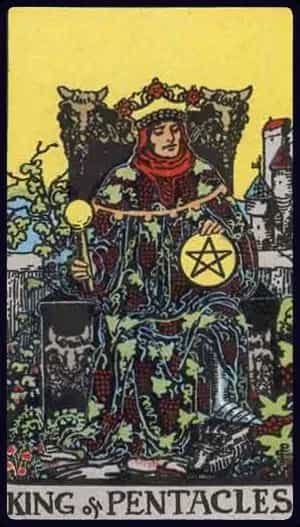
  • King of Pentacles
    Upright
    Wealth Mastery · Business Vision · Steady Leadership
    Reversed
    Materialism · Stubbornness · Power Abuse

    King of Pentacles

    The King of Pentacles shows a king seated on a throne adorned with bulls, holding a pentacle and scepter, with a castle in the background. Every detail represents mastery over the material world and prosperous leadership. The King of Pentacles embodies wealth, stability, and wise resource management. He signifies the ability to build lasting success through disciplined strategy and grounded judgment.

More Tarot Features

Tarot Reading

Get personalized tarot insights. Ask what's on your mind.

Start Reading

Tarot Spread Library

Master popular tarot spreads like Celtic Cross, Three-Card, and more.

Learn Tarot Spreads

Keep exploring

Go further with yes/no draws, daily energy check-ins, and deep guided readings.